

Endangered Species Coalition: Protect The Endangered Species Act
Congress is considering H.R. 65, the “Armed Forces Endangered Species Exemption Act.” On the surface, this bill claims to support military readiness. But this bill is an overreach that seriously threatens the Endangered Species Act (ESA) by carving out massive loopholes that put vulnerable wildlife in danger. Military lands are biodiversity strongholds. Many endangered species survive on these lands because they’ve been shielded from the kind of development that destroyed wildlife habitats elsewhere. Stripping ESA protections could devastate already fragile populations. Several endangered or threatened species, such as the Florida panther, California condor, and red wolf, have been found on U.S. military lands. What H.R. 65 would do: Exempt the entire Department of Defense from the ESA; Ban ESA protections on military lands; Eliminate accountability for harming or killing endangered species. Speak out HERE

CALPIRG: Make Smartphones With Replaceable Batteries
Americans throw away more than 400,000 cell phones every day. Not every year. Every single day. If you stacked these phones flat on top of each other, they would create a tower six times taller than the Empire State Building. If we want to reduce this electronic waste, we need phones that are durable and repairable. All rechargeable batteries eventually die, which means smartphone manufacturers, like Apple, Samsung, and Google, can prevent a big chunk of this e-waste with one simple step: Make the batteries in their phones easily replaceable. Tell tech companies – Let buyers easily replace their phone batteries. Speak out HERE.

CALPIRG: Tell your state legislators: Remove ultra-processed foods from California public schools
One of the most important aspects in childhood development is the food that is served to our kids in school, but unfortunately some of those meals are Ultra-Processed Foods (UPFs). UPFs are chemically modified food products that can be made with harmful chemicals and additives to enhance their taste and texture. They’ve been linked to serious health conditions, which include cancer, cardiovascular disease, type 2 diabetes, reproductive and neurobehavioral harm, and mental health decline. Right now, California lawmakers are considering a bill that would help phase out UPFs from meals served in public schools, which is a step forward in helping protect kids in school. Tell your state senator: Support AB 1264 to get harmful additives out of our school lunches. Act HERE.
Ocean Conservancy: Tell Congress: Filter Out Microplastics
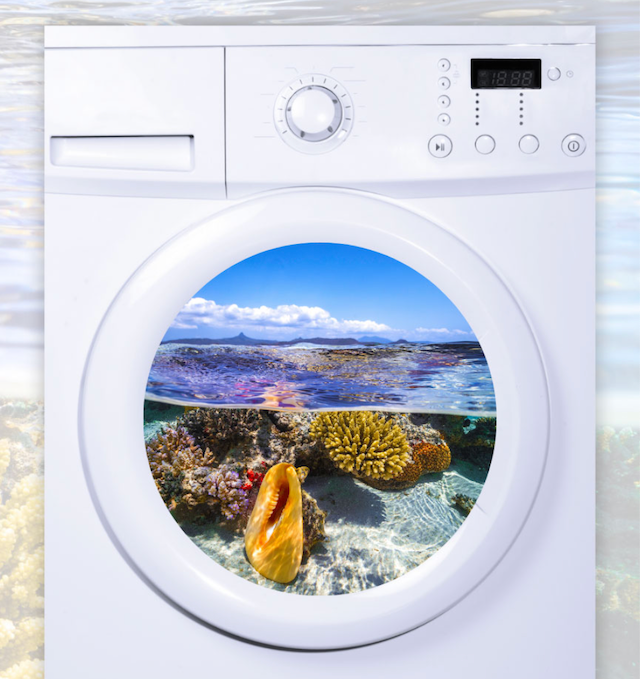
Among the most common forms of microplastics found in the environment are microfibers, thread-like strands that shed from our clothes and textiles when we produce, wear and wash them. A single load of laundry can release up to 18 million microfibers, with many of them eventually making their way into the ocean. The good news? There’s a proven solution that helps address this problem. Congress is considering the Fighting Fibers Act, a bill that would require new washing machines to include microfiber filters, which halt microfibers at the source (our laundry water!). Let’s make sure our lawmakers pass the Fighting Fibers Act. If you’re with us, urge Congress to filter out microplastics now. Act HERE.
Environmental Working Group: Protect Californians From Toxic PFAS
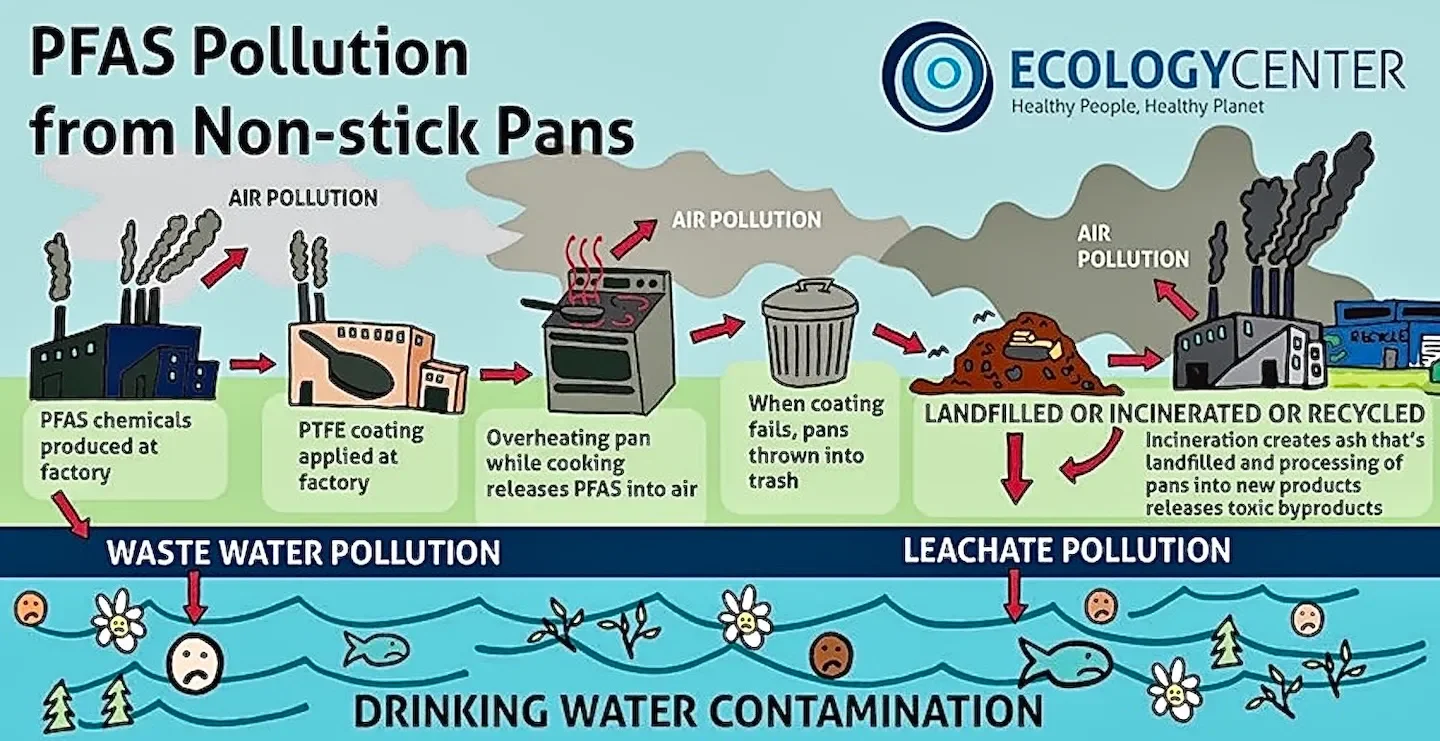
Governor Newsom has the chance to protect Californians from toxic PFAS in everyday products, and he needs to hear from you. Last week, the California legislature passed SB 682, which would ban PFAS from household items like cookware, dental floss and cleaning products. The bill is now on Governor Newsom’s desk, and he could decide to sign or veto it at any moment. The chemical and cookware industries have been lobbying hard to stop this bill. The New York Times even reported that Rachel Ray and other chefs who profit from their lines of PFAS-coated cookware are speaking out against the bill. Your voice is urgently needed to counter industry pressure. Send message HERE.

Surfrider: Keep Plastic Microbeads Out of Personal Care Products in CA!
California Governor Gavin Newsom is threatening to veto AB 823 (Boerner), a proactive bill that would ban the sale of toxic plastic microbeads in non-rinse-off personal care and cleaning products, and ban plastic glitter in personal care products. Microplastics have been linked to numerous health concerns, including cancer, dementia, infertility, and hormone disruption. AB 823 would ensure that Californians are using safe products and not polluting the state’s waterways. AB 823 would take effect beginning January 1, 2029. Urge Newsom to sign AB 823 HERE.

Environment California: Tell the Interior Department – Don’t mine the deep sea
Scientists have barely begun to learn about the fragile, complex ecosystems of the sea floor. This mining plan threatens to destroy deep sea ecosystems before we ever get the chance to learn more about them. Many of the species that live in the depths are long-lived and slow-growing. It could take years for them to recover after their habitat is disturbed by deep-sea mining. In addition, some forms of deep sea mining could create plumes of waste that may travel huge distances from mining sites, with wide-ranging negative impacts on other ocean ecosystems. Tell the Interior Department: Don’t mine the deep sea. Act HERE.

Oceana: Defend The Marine Mammal Protection Act
Write today to ask you your representatives to defend the Marine Mammal Protection Act (MMPA) against a new bill under consideration in the House. The bill would dismantle: a broad prohibition on actions that harm marine mammals and their habitat; reducing bycatch of marine mammals in fisheries; and using science-based management to recover populations to healthy levels. More info and Action HERE.

Santa Cruz Surfrider: Become a Beach Guardian and Help Protect Our Shores
Our beaches are the heart of Santa Cruz County. Join the Surfrider Beach Guardian program to help keep our shores clean and healthy! As a Beach Guardian, you’ll monitor a local beach, organize cleanups, report pollution, and participate in efforts to protect our oceans and coastlines. It’s a fun and impactful way to make a difference and preserve the beauty of our beaches for everyone to enjoy. Let’s protect what we love! Info HERE.
Resilient Central Coast: Everyday Opportunities For Local Climate Action
We’re excited to announce that we have reimagined a new web experience inspired by your interests over the past few months – featuring more event-focused content, especially around emergency preparedness and home electrification. As part of this evolution, you’ll now receive monthly updates directly from Ecology Action, the nonprofit powering RCC and many other local climate initiatives across the Central Coast. What’s changing? You’ll get climate action tips, webinar invites, and local resources—all in one place. No more login barriers—just open access to tools and inspiration. Exposure to more community climate actions. Sign up HERE.

Elkhorn Slough Team: Speak Up to Preserve The Reserve!
The White House Office of Management and Budget proposed FY2026 budget calls for substantial funding cuts for NOAA, including the National Estuarine Research Reserve program. If this budget is approved by Congress, the Elkhorn Slough Reserve — one of 30 Reserves established around the country as hubs for environmental stewardship, research, and education—will face substantial reductions in programs and staffing. It is important for community members to voice their support for the Elkhorn Slough Reserve to their congressional representatives. Federal funding covers 70% of Reserve operating costs. Without congressional support, Reserves could stand to lose this funding after October 1, 2025. Three actions you can take HERE.

Earthjustice: Protect forests from massive expansion of logging that will make fires worse
Following up on promises to ramp up logging — including clear-cutting — across federal forests, the administration has announced plans to obliterate the Roadless Rule, a landmark land-conservation policy that has protected many of the most pristine backcountry areas of our National Forest System against costly and harmful road building and logging since 2001. The roadless rule has protected 58 million acres of our wildest national forest lands from road building, fires, oil and gas drilling, and logging for more than a generation. More than 90% of fires start within a half mile of roads in our forests. Defend the forest protections we have fought so hard for by telling the administration that you oppose increased roads and logging in our most pristine federal forests, and weakening of environmental protections. Take ACTION

Oceana: Help Protect California’s Ocean Biodiversity
Set gillnet fishing gear is known to have high rates of what is called bycatch — the incidental catching of nontargeted marine animals like sea lions, seabirds, sharks, and other species that often results in harm or death for the entangled animal. These gillnets are still used in offshore ocean waters in Southern California and around the Channel Islands. Assembly Bill 1056 authored by Assembly member Steve Bennett (D-Ventura) — aims to protect California ocean biodiversity from gillnet fishing. This bill will end the use of set gillnets in California, through a long-term phase-out that allows current fishermen to continue fishing through their lifetime but prevents the future transfer of the permit. Tell your state legislators to pass this bill now HERE.
Save Our Shores: Help Activate The Ban The Butt Ordinance
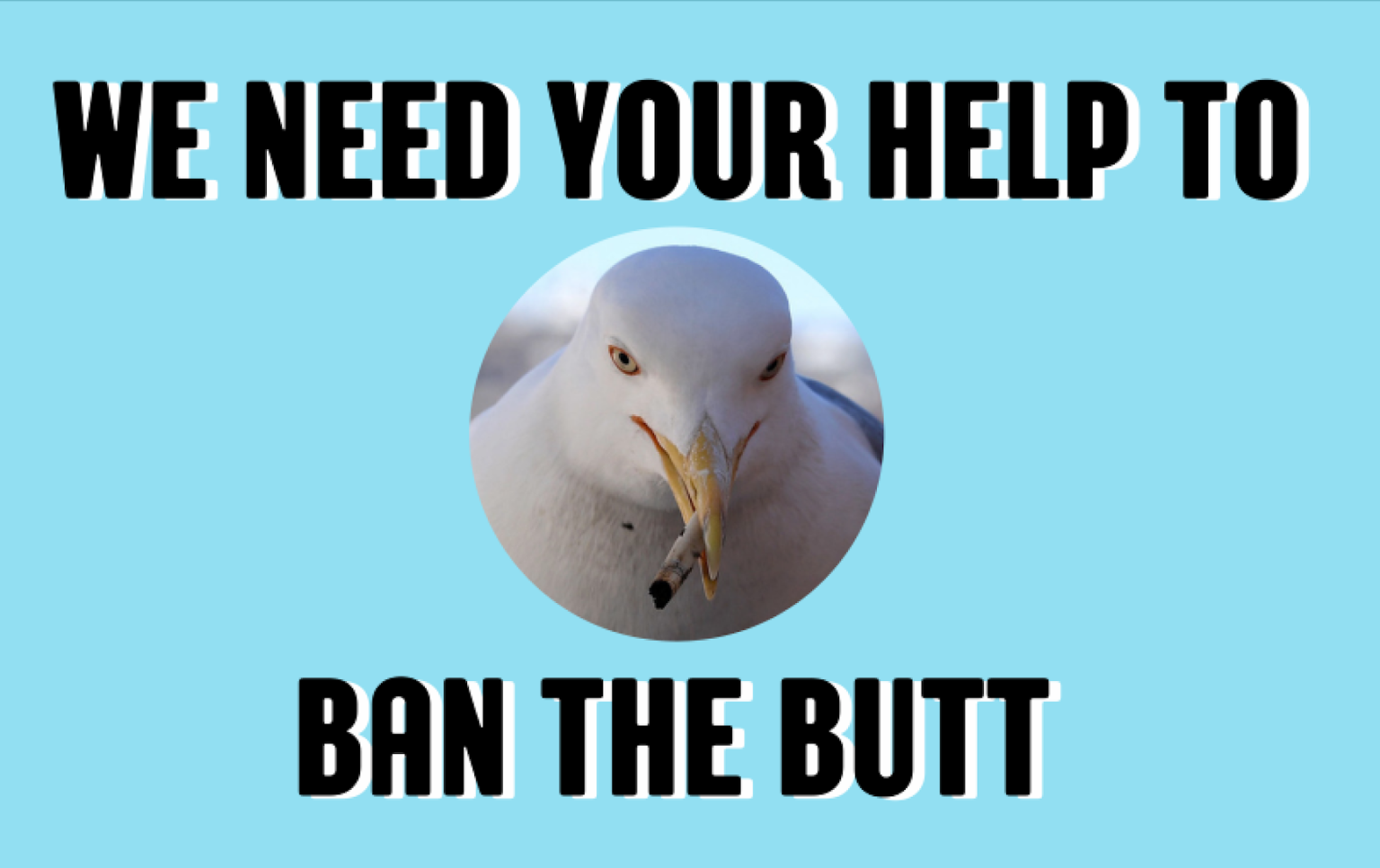
Last fall, something remarkable happened: the Santa Cruz County Board of Supervisors voted unanimously to ban the sale of filtered tobacco products — a bold move to protect our environment from the most littered item on Earth. It was a big win for public health and ocean advocates alike. On June 24, the Santa Cruz City Council unanimously voted to support the ban! More recently Capitola voted for the ban so now that two local cities have pass similar ordinances, the law goes into effect until . Go HERE to support this measure passing in Watsonville, Scotts Valley and/or Monterey.

Sun Day: Tell Your Governor To Accelerate Solar Construction Before Subsidies Expire
We’re approaching a critical deadline for rooftop solar—and for our climate. Unless state leaders act quickly, solar tax credits set to expire on December 31 — the result of legislation signed by former President Donald Trump — could slow new rooftop solar construction just when we need it most. Expanding rooftop solar is one of the most immediate and effective ways to reduce climate pollution. Solar panels cut greenhouse gas emissions, reduce demand for fossil fuels, and improve air quality in local communities. A new study shows that the climate benefits of rooftop solar have been vastly underestimated—especially when compared to centralized utility-scale generation. Send a message urging your governor to accelerate rooftop solar before the deadline. Act HERE.
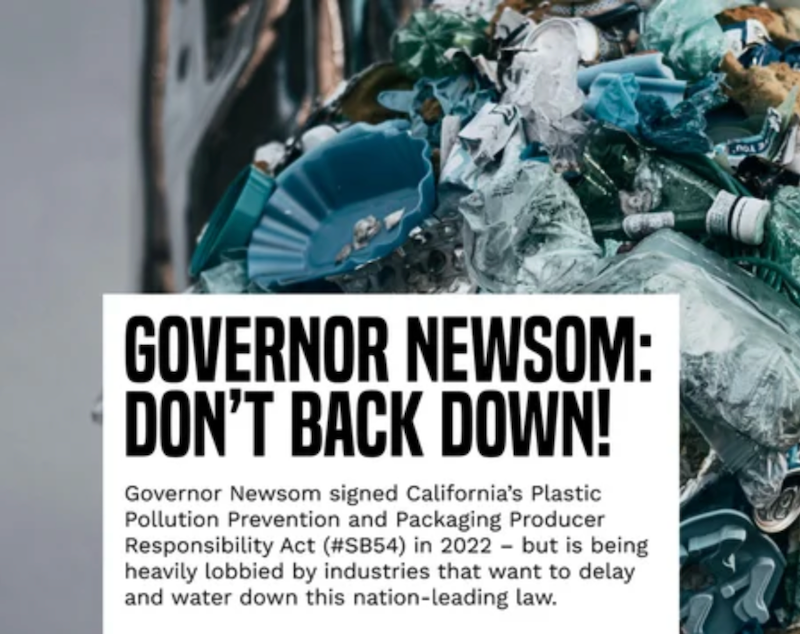
CALPIRG Students: Don’t weaken California’s landmark law against plastic pollution
Plastic cups, takeout containers, and packaging litter our environment and degrade into microplastics that threaten public health. That’s why CALPIRG Students campaigned to pass a nation-leading law against plastic packaging pollution, which requires all single-use foodware and packaging to be recyclable or compostable and requires major reductions in plastic production. Unfortunately, CalRecycle’s latest draft regulations weaken the requirements of the law, creating new broad exemptions and allowing harmful practices to public health such as “chemical recycling,” a process akin to burning plastic. Tell Governor Newsom: don’t allow harmful plastic burning in California. Act HERE.

CALPIRG: Tell your representative: Keep the U.S. Postal Service’s electric vehicle fleet on the road
The U.S. Postal Service (USPS) is in the process of electrifying its fleet of delivery vehicles. The first zero-emission mail truck hit the road last year, and now more than 7,200 electric delivery vehicles are bringing Americans their mail. But a proposal in the U.S. Senate would have forced the USPS to sell off its EVs and reinvest in fossil fuel-burning trucks. This supposedly money-saving move would actually cost the Postal Service upwards of $1.5 billion. Selling off trucks we already bought and letting charging infrastructure go to waste just doesn’t make any sense. Even though the proposal was pulled from current legislation, we expect it to be raised again soon — and we need to stop it before it can get started. Take action to stop this wasteful proposal. Tell your representative: Keep the U.S. Postal Service’s electric vehicle fleet on the road. Act HERE.

Turtle Island Restoration Network: Save The Marine Mammal Protection Act
A dangerous draft bill in Congress would gut the Marine Mammal Protection Act (MMPA), one of our strongest conservation laws. It would drastically weaken protections for whales, dolphins, manatees, and seals by lowering conservation standards from “healthy populations” to mere “survival,” stripping science-based limits on harm from industrial activities, delaying critical protections for endangered species like the North Atlantic right whale, and undermining global efforts to reduce marine mammal bycatch. This is not a modernization of the MMPA. Rather, it’s a full-scale rollback that will threaten the lives of countless marine mammals. Take action today to urge members of the Subcommittee on Water, Wildlife, and Fisheries to protect marine mammals by opposing this draft bill. Action HERE.

CALPIRG: Tell the EPA: Restrict 2,4-D, a dangerous, drifting pesticide
We shouldn’t be dousing the fields that grow our food with a dangerous chemical from the 1940s — but the latest mapping data shows that vast swathes of America are covered in a toxic pesticide called 2,4-D. We should be leaving 2,4-D in the past where it belongs. Instead, in recent decades, the Environmental Protection Agency (EPA) renewed and expanded the use of this highly toxic pesticide. The herbicide is intended to kill weeds on farms, but 2,4-D doesn’t stay where it’s sprayed. When sprayed over crop fields, 2,4-D can remain airborne for weeks and travel for miles. Tell the EPA to restrict the use of 2,4-D unless and until it’s proven safe. Action HERE.

CalPirg: Tell Whole Foods To Reduce Plastic Packaging
The U.S. has a big plastic problem: Every year, we produce a staggering 35 million tons of plastic waste. Big companies can do a lot to fix that. But when it comes to plastic waste, Whole Foods isn’t measuring up. In a 2021 report, the grocery store earned an “F” score on plastic waste reduction, putting it behind Taco Bell, Walmart and Amazon. We know that Whole Foods can do better and live up to its eco-friendly image. That’s why we’re calling on Whole Foods to cut down on single-use plastics. Tell Whole Foods: Reduce single-use plastic packaging. Act ACTION.